
Storyline Maker
A storyline is the chain of events that carries a character from the start of a story to its end. This maker gives you a proven structure to hang your ideas on — three-act, hero’s journey, seven-point, Freytag’s pyramid or the four-part kishōtenketsu — with a guiding question for each beat, a premise generator for when you’re stuck, and a timeline view of where each beat falls in the story.
- Free to use
- No sign-up
- Runs in your browser
Storyline maker
Story Planning Templates
Printable story structure worksheets (three-act, hero’s journey, seven-point, Freytag), character profile sheets, scene cards and a plot timeline.
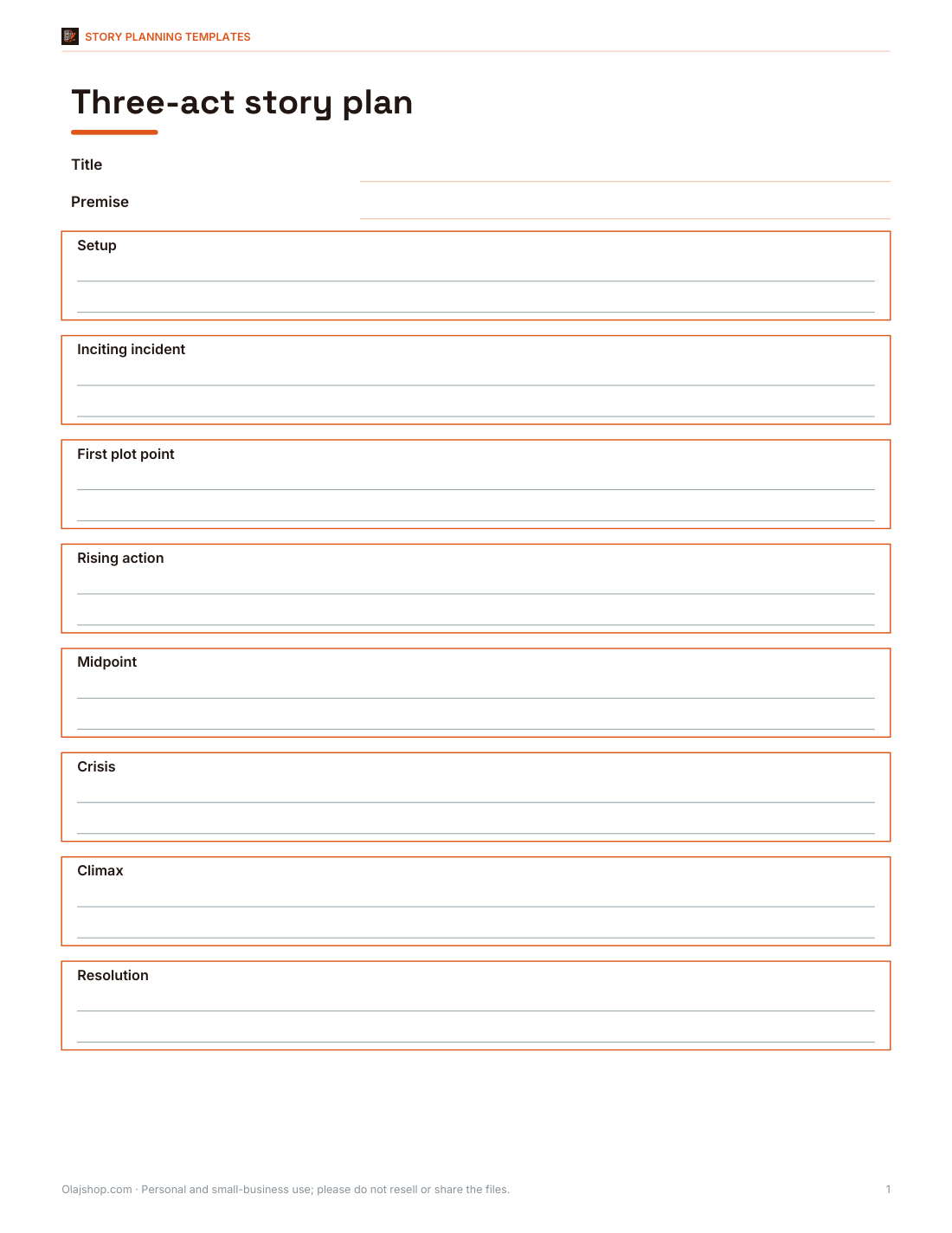
- Three-act worksheet (PDF/DOCX)
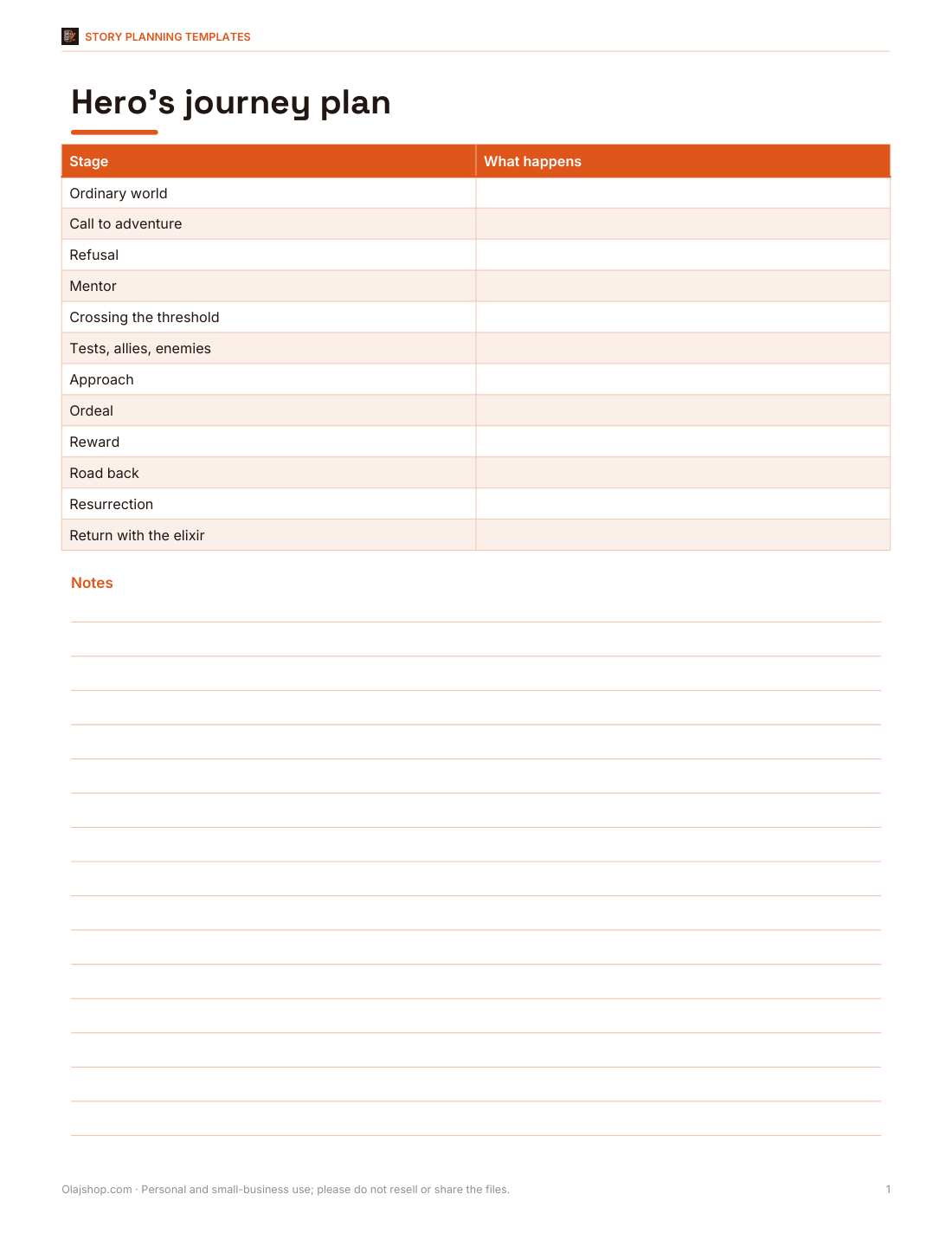
- Hero’s journey (PDF/DOCX)
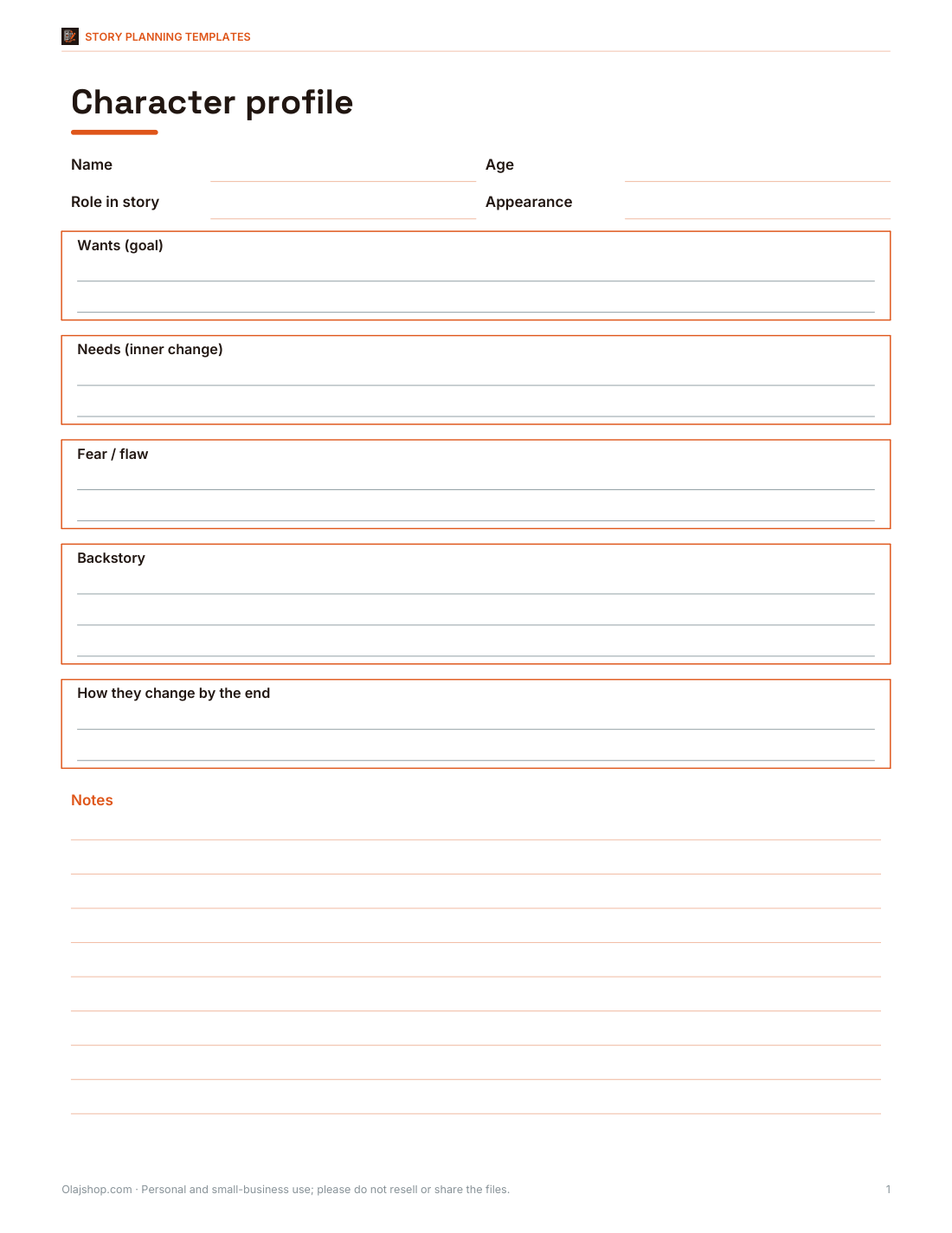
- Character profile (PDF/DOCX)
- Scene cards (PDF)
- Plot timeline (PDF)
Formats: PDF, DOCX. Instant download after payment (link valid 72 hours, up to 5 downloads). AI-assisted: the templates were drafted with AI help and reviewed and laid out before publishing.
$5.00 USD, one-time 5 files · about $1.00 each
- Instant download
- 7-day refund
- Secure checkout by Stripe
7-day money-back guarantee. Full refund within 7 days of purchase, even after you download.
Free sample: Three Act Worksheet (PDF, 58 KB)
Full refund within 7 days — see the refund policy and license.
Free printables
Single sheets you can print right now, no sign-up. The full pack adds every sheet in one download plus the editable files.
 Printable Three-Act Story Worksheet
 Printable Hero’s Journey Planner
 Printable Character Profile Sheet
 Printable Scene Cards
 Printable Plot Timeline Chart
Choosing a structure
| Structure | Beats | Good for |
|---|---|---|
| Three-act | Setup, confrontation, resolution with key turning points | Almost any story; screenplays and novels |
| Hero’s journey | 12 stages from ordinary world to return | Adventure, fantasy, transformation stories |
| Seven-point | Hook, two plot turns, two pinches, midpoint, resolution | Planning from the ending backwards |
| Freytag’s pyramid | Exposition, rising action, climax, falling action, dénouement | Classic drama and short stories |
| Kishōtenketsu | Introduction, development, twist, reconciliation | Stories driven by change of perspective rather than conflict |
How to use the storyline maker
- Choose a structure; the timeline shows roughly where each beat falls.
- Write a one-sentence premise, or click for a random one in your genre.
- Answer the guiding question for each beat in a sentence or two.
- Read the beats in order — does each one cause the next?
- Copy or print the outline and start drafting scenes.
Your notes are saved in this browser for each structure, so you can switch between structures to compare.
Worked example: three acts
| Beat | Example (lighthouse premise) |
|---|---|
| Setup | Mara, 15, helps her father keep the lighthouse and dreams of leaving the island. |
| Inciting incident | She finds a bottle with a note predicting tomorrow’s storm — in her father’s handwriting. |
| First plot point | The storm arrives as described and her father vanishes; she takes the boat alone to find him. |
| Midpoint | She learns the notes come from the future, written by her father to stop a shipwreck. |
| Crisis | The lighthouse lamp fails as a ferry approaches the rocks. |
| Climax | Mara relights the lamp by hand and guides the ferry in, following the last note. |
| Resolution | Her father is found safe; Mara decides to stay and learn the keeper’s craft — for now. |
What makes a strong storyline
- A character who wants something specific.
- Obstacles that escalate — each harder than the last.
- Cause and effect: events happen because of earlier choices, not coincidence.
- A midpoint that changes the direction or stakes.
- An ending that answers the story’s central question.
- Change: the character or their world is different at the end.
Stakes and tension
Readers keep turning pages when they care what happens and fear it might go wrong. Make the stakes clear early — what does the character lose if they fail? — and raise them at the midpoint and crisis. Tension also comes from time pressure (a deadline, a storm arriving), from secrets the reader knows but characters don’t, and from choices where every option costs something.
Using structure without being formulaic
Structures describe patterns found in many stories; they aren’t rules. Beat positions are approximate — your inciting incident might happen on page one or halfway through the first act. Use the structure to check that your story has momentum and turning points, then let characters and voice make it your own. Many writers outline loosely, draft freely and use a structure again when revising.
Scenes, beats and chapters
A beat in a structure is not the same as a scene. The inciting incident might take one scene; the rising action might take twenty. Once your beats are in place, list the scenes you need to get from one beat to the next — each scene should change something: a goal achieved or blocked, a secret revealed, a relationship shifted. Chapters then group scenes for pacing, often ending on a question or turn that makes the reader keep going.
Subplots
| Subplot type | Purpose |
|---|---|
| Romance or friendship | Adds emotional stakes and a second arc |
| Mentor story | Shows what the hero must learn |
| Antagonist’s plan | Keeps pressure on from the other side |
| Mystery thread | Adds questions that pay off at the climax |
Give each important subplot its own mini-beginning, turn and ending, and tie at least one subplot’s resolution to the main climax so it feels connected.
For teachers
The maker works well for teaching narrative writing: pupils choose a structure, generate a premise and plan each beat before writing. Freytag’s pyramid and three-act structure suit younger writers; the hero’s journey helps older students analyse novels and films they already know. Printing outlines lets students compare plans in pairs.
Privacy
Your outline is stored only in this browser; nothing is uploaded.
Story planning pack
The optional pack includes printable story structure worksheets, character profile sheets, scene cards and a plot timeline you can fill in by hand. The storyline maker above is free.
AI-assisted content
This page and the premise lists were drafted with AI assistance and reviewed before publishing. Premises are original starting points.
Frequently asked questions
What is a storyline?
The sequence of main events that carry a story from beginning to end.
What is the three-act structure?
Setup, confrontation and resolution, with turning points between them.
What are the 12 stages of the hero’s journey?
Ordinary world, call, refusal, mentor, threshold, tests, approach, ordeal, reward, road back, resurrection and return.
What is kishōtenketsu?
A four-part structure — introduction, development, twist and reconciliation — that doesn’t rely on conflict.
Can it give me a story idea?
Yes, click “Give me a premise” for a random one in your genre.
Is my outline saved?
Yes, in this browser.
Which structure is best for beginners?
Three-act structure or Freytag’s pyramid — both are simple and flexible.
Do I have to follow the percentages?
No — they are typical positions to help pacing, not strict rules.
Can I use it for short stories?
Yes — Freytag’s pyramid or kishōtenketsu suit short stories well.